Monday, 26 April 2021

Corporate Governance in Banking


Corporate Governance in Banking

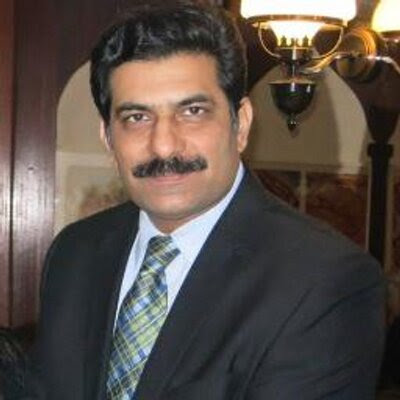
Mubasher Mir


I saw a press release, which was released officially by Banking Mohtasib Pakistan (Ombudsman), that 11,732 complaints has been received in his office in the first quarter of 2021, it is 135 percent high as compared to the previous year’s same period, which  was 4994. It is a high level in increase of complaints against commercial banks from banking consumers. This has been also mentioned that 132.62 million rupees has been recovered from commercial banks as compensation for consumers.

 Although it is a big question regarding corporate governance in banking sector of Pakistan, but I was surprised more when I saw the details of Penalties from State Bank of Pakistan to the Commercial Banks. All details are available on the website of   State Banks of Pakistan. Morethan 2200 million rupees has been received as fine from the Commercial Banks during, 2020.

 During the first quarter Jan-may 2020 the 12.800 million rupees fine was imposed on HBL. In the second quarter Apr-June 2020, UBL 137.001, JS Bank 71.417, Meezan Bank 81.060, Faysal Bank 96.128, Bank of Punjab 286.333 (highest in this period), Habib Bank 204.217, MCB 158.474, NBP 269.810,

 Bank Al-Habib 46.802, habib Metro 22.805, Bank al-Falah 40.305, Askari Comm 29.814, Bank Islami 11.517, Punjab Provision Co-operative Bank 81.500, Zari Tariqiati Bank 147.250. these all fines are in millions Pak rupees. This quarter was the worse for banking sector.

 All fines were imposed because irregularities found at high levels, there were also procedural violations.  All actions has been taken by panel and warned to strengthen its process. Third quarter July-Sept, 2020 was quiet low because the fine imposed on four commercial banks, there were, Bank Islami 116.269, Soneri Bank  59.234, Bank of Punjab 10.00 and Al-Barka Islamic Bank 86.119 millions in Pak rupees

 The last quarter of the year was bit low, only unfortunate bank was Habib Metro the penalty imposed 59.516 million in Pak rupees. It was also becomes the violation of instructions. The bank has been advised to conduct an internal inquiry as well.

 All above details is an open evidence that the enforcement action department of state bank of Pakistan is vigilant and it should be more. Actually these fines are could be the real loss of account holders or the consumers of commercial banks.

 The question raises, why the corporate governance in banking sector of Pakistan is so poor and the ignorance and negligence in the system. The answer is very simple that there is a political influence and sethia business style in Pakistan. So, the Board of Directors have no professional approach, according to the requirement of the market, because of the poor corporate governance, fake account holders were found in two commercial banks (flooda wala and paper wala etc), summit bank and UBL are two major examples.

 So, its  unfortunate, the corporate governance in banking sector is not improving as required.

 As we all know, what are the main features of corporate governance, firstly the Transparency in operations, accountability becomes on second and the last but not the least is the fairness in dealing. We all have remembered the case of Khadim Ali Shah Bukhari Bank, how it was handled, technically and politically. Mehran Bank scandal was also handled politically. The recent example of  HBL New York Branch, where heavy penalties were imposed and the National Bank case in Bangladesh, where operations have been suspended due to violations. Right now, some presidents of Commercial Banks are facing the cases in NAB

 It is a matter of displeasure that in most of the banks, there are lobbies in employees where unhealthy practices are going on. Government is trying to improve the workforce to empower the women, but so called lobbies are the major hurdles to improve the member of professional and talented females in financial sector. Pakistani Women is facing the huge problems, whether she is working or trying to be a member of earning bread for her family.

 Although in urban society, there are opportunities but in rural society, there are a lot of difficulties, even in corporate sector. First Women Bank was as good initiative for Women empowerment by then first Lady Prime Minister, Mohtarma Benazir Bhutto .but  because poor corporate Governance. Now this institution has been considered as liability.

 How we can improve the situation, this is the big challenge for corporate sector, especially in banking. The performance of human resource departments in corporate sector is very much poor. I have observed an HR Department of a commercial bank, where they are always busy to conduct written tests and interviews for new comers, but actually it’s an eye wash. In fact they have a policy to pick and choose according to the will and wish of powerful internal lobbies or sethes Approval.

 So they are not honouring the talent and professionalism. There are some pocket unions, which are more powerful than board of directors. So the result is obvious. As we know thre are banking academies and banking institute but even then need to promote professional studies during job as well.

State Bank of Pakistan is promoting Islamic banking but there as need to introduce Islamic banking courses in Universities. Shariah book should be represented all FIQQA’s and Islamic School of thoughts, it will improve the products and services.

 Most of the account holders do not know, what the hell is going on, where he or she have trust to deposit his/her savings .

 The state bank of Pakistan should publicise the violations of commercial banks in Urdu, English and regional language newspapers, on the end of every quarter.

 This could be the best way to evaluate the services and credibility of banks. This publicity can also helpful to improve the corporate governance in banking.

 We should not ignore the consumers because they are the actual stakeholder of every market or business sector. If the consumers is satisfied then your organization can flourish by leaps and bounds.


Monday, 22 February 2021

Growing challenge of cyber security


Growing challenge of cyber security


Mubasher Mir


It’s a common thing now-a-days that many of us are receiving fake messages on different mobile networks that there is a good news for you that you could receive a handsome amount; for details please contact on these numbers. Some simple people are trapped and are being looted through fraud and hacking. Hackers can operate anytime from anywhere. The most favorite sector of hackers is the banking system. It is considered and a proven fact throughby various reports that this system still hasloopholes.

As we all know, Pakistan suffered the largest cyber attack on its banking system in the last days of October, 2018. It was the worse and most unfortunate day when over 19,000 debit cards worth 2.6 million US dollars from 22 Pakistani banks were found to be stolen by cyber thieves, better known as hackers.

The most of the hackers belonged to Russia, but unfortunately, we were unable to protest or pursue this case because there was no mechanism to stop these unethical and unlawful practices. The virtual world is still like that; the hackers are still enjoying unsecure digital world.

Although Pakistan took several measures to save the banking system but the cyber robberies are happening in any case. One Time Password (OTP) system was introduced by the State Bank of Pakistan for foreign and online transactions. It’s more secure and reliable.

In this present world, information is more precious than any metal. Thousands of secret services and social networks are trying to get data through various tools and methods. Their prime purpose is to get first-hand information and knowledge about the people, which is most important on this earth. So, the personal data is precious as well as the thoughts.

The business scenario on this earth is as important as politicalissues. Most of the entities have their prime object is to get wealth; some are trying to earnit while few are trying to grabit. But it is a reality whether we accept it or not.

Although this digital world looks very attractive but no one is sure whether it is secure or not. It is fact that no-one is convicted for committing digital crime in Pakistan. That’s why people are indulging in taking risk of cyber attack on data banks of financial institutions.

A famous cyber robbery was observed in MCB, DHA Phase IV, Karachi where the Operation Manager was allegedlythe culprit. Handsome number of depositors were hit by him for a total amount of around 200 million rupees.

Federal Investigation Agency (FIA) took the notice of this activity and arrested the Operation Manager of the branch. The major amount was recovered. Now, most of the commercial banks have system to reconcile their accounts on daily basis, but according to reliable sources,the MCB is still following the previous practice to reconcile their accounts i.e. on weekly basis.

The above-mentioned cyber robbery occurred because of this weak, poor and lethargic way of working in the above-mentioned institution.

After COVID-19, E-commerce and online system including banking has been increased. It’s the need of the hour to have a more secured and reliable digital system, especially in the financial sector. The guidelines should be revisited by the regulators concerned. It should be directed by the Ministry of Information &Technology that the cyber governance should be proactive. It is unfortunate that the draft of data protection law is yet to be presented in the Parliament.

Although aPersonal Data Protection Authority has been proposed but when it will be passed from both the Lower and the Upper houses, nobody knows. I wonder, the lawmakers are not concerned over the intensity of the situation.

There is a National Response Center for Cyber Crimes (NRCCC) but they have no mechanism to prevent the system from hackers. Unfortunately, ethical hackers are very much here in Pakistan, there is a need to develop the cyber soldiers to secure the Digital System. Corporatebanking and some public sector organizations including defence institutions are heading towards the paperless era. There will be no written back-up in the organization’s record room.

So, the digital security shield is more important than any other defence system. However, every institution is seriously working to make its system safe and secured, but we should keep it in mind that the dark webs are also here.Thus, developing the cyber army is the futuristic approach.

Now a days, most of the countries are developing their cyber armies. Some reports show that India has more thanten thousand cyber soldiers, whereas the most trusted neighbor of Pakistan, people’sRepublic of China has more than one million cyber security experts. Interestingly, India has its cyber army, which is called Defence Cyber Agency (DCA) is Tri service command of the Indian armed forces. According to media reports, Pakistan Army indentified in August 2020 that the major cyber-attacks on Pakistani websites were from Indians.

I found a Facebook page named Pakistan Cyber Army (PCA) having more than 26,000 followers but it is a private group of Pakistanis. Cyber security experts are trying to defend the Pakistani websites. There is a need to develop an institution of cyber security experts in Pakistan officially.The Federal Government should be vigilant in this regard so as to deal with this challenge.


The writer is Resident Editor of Daily ‘Pakistan’ Karachi and President of Karachi Editors Club. He can be reached at: mubashermir99@gmail.com

Thursday, 7 January 2021

Conflict of interest


Conflict of interest


Mubasher Mir

This word is known to me as its definition defines that a Situation in which a person is in a position to derive personal benefit from actions or decisions made in his official capacity, but I witnessed this situation as member of Arts Council of Pakistan Karachi and observed more as the candidate in Arts Council’s Elections. It was really an interesting and learning experience. It reveals on me that a worse condition of conflict of interest is existing in Arts Council of Pakistan Karachi.
The person, who is in power since 2008 has an all in all position in helm of affairs of the oldest cultural Institution of Pakistan. The real story behind the success is having an authority to enroll new membership as voters.
This is the same story of every association or trade body in Pakistan. Not even those organizations, but also the whole nation has been indulged in conflict of interest whether Politics or Civil and Military Bureaucracy.
So, the state pillars, Parliament, Administration and Courts are being ruined because of this curse. That’s why a mafia like situation is prevailing in the whole society. It’s a strong observation about our country that in Pakistan anyone from a regulator agency can also work with any other commercial entity without any problem. This gives rise to conflict of interest, when someone’s judgment can be influenced or perceived to be influenced by a personal, financial or other interest.
There has been many examples in the history of Pakistan about conflict of interest since 14th August, 1947. But in the recent past, the situation became worse and worse. The extension of as Army Chief of Gen. Zai-ul-Haq and Gen Pervaiz Musharraf was absurd by all means. Succession in Political parties created strong hold of families.
In Governance, it created nepotism and corruption at all levels. Quaid-e-Azam Muhammad Ali Jinnah strongly pointed out the curse of nepotism and corruption in his first speech on 11th August, 1947. Unfortunately our rulers has been failed to act on the guide lines of the father of the Nation.
The English newspaper Dawn reported in its 5th Jan, 2017, web edition regarding the Supreme Court of Pakistan proceedings in Panama papers, Justice Asif Saeed Khosa asked the Makhdoom Ali Khan counsel of then PM, that the Prime Minister Mian Nawaz Sharif was using his official position for transfer of money in 1997. It was also a worse example in Governance. An other example regarding the appointment of Country Director of World Bank in Pakistan then Prime Minister Raja Pervaiz Ashraf appointed his Son-in-Law for the same.
Recently, the digital Pakistan foundation related to Prime Minister Imran Khan, flagship Digital Pakistan initiative has come under conflict of interest although Tania Aidrus, amid of this controversy resigned because of her nationality but it created bad example of personal interest.
It’s a long list of unethical practice in Government affairs at lower, middle and higher level, which is shameful for our society. It looks the ethics has been vanished and only personal motives are prevailing.
A shameful example has been existed for nominations of women in Parliament (Provincial and National Assembly) on special seats. Although it was created for the empowering of women in political arena, but the party leaders and influential political personalities are using this radical constitutional amendment in favour of their families. That’s, why, since 2002, its impact is not like that as it was conceived. Many talented and deserving women political workers are deprived to become the member of the Assembly.
Conflict of interest, could be addressed positively by rising the ethical and moral values in the society and culture. Unfortunately, our moral values has been declined in political culture especially. Immoral and unethical values are against the spirit of Islam and any other religion as well. In recent times, it’s a worse shape of exploitation, which is totally forbidden in spiritual and Islamic spirit. State and society is being ruined because of this unethical practice.
It is the high time to prevent this curse by law. It will be in the interest of state and people, The intelligentsia should take the responsibility to build the public opinion and awareness among the lawmakers. This unethical practice is against the human rights because it affects the equality and level playing field for every citizen of the state. Because of this, democracy is being labeled with wested interests not the service to mankind in Pakistan.
National and Provincial Assemblies and its nurseries like trade bodies, chambers of commerce and industry, labour unions and the Arts Council of Pakistan Karachi as well are badly indulged in this unethical practice.
Conflict of interest Act, could be helpful to save the society and restore the value for Good Governance in Public sector.
The last but not the least, the great saying of Hazrat Imam Ali A.S. that, a Society or State can survive with infidelity (Kufr) but not injustice.


Tuesday, 27 October 2020

Human Rights in indigenous regions in South Asia


Human Rights in indigenous regions in South Asia


Mubasher Mir


Historically this has been learnt that people were living with peace and harmony in Indus Civilization. Indus water basin is source of life from millions of years and we can say since the creation of this Earth.

As for as the present history is concerned different dynasties were the rulers in different areas of Indian Sub Continent whichis called now South Asia. Presently, the South Asia region is consisted on Bangladesh, Bhutan, India, Nepal,Pakistan, Maldives and Sri Lanka. A huge population of indigenous people of South Asia is living in these countries now.

History tells us that Alexander came from Macedonia and entered Sub-Continent from Kabul. He crossed the Indus River and his battle was fought on River Jhelum, it’s situated 120 Km from Islamabad the Capital of Pakistan now. In these times Western World considered that India is the last destination of this world.

Alexander was not able to conquer the Sub-Continent and returned his home with severe wound which caused his death during Journey. After Alexander other invaders came from Central Asia, Arab and Iran.They ruled many Centuries in Sub-Continent. Religiously they were Muslims. Britishers and French came later, Britisherscame as traders (East India Company) but they captured the whole.

Sub-Continent got liberty and new Countries came in to being presently it is called South Asia.

In ancient times, people were living in tribes; a tribal mindset was prevailed in every Continent politically, economically and socially weak people minorities or families were used to live as salves. Great Prophet Moses (A.S.) challenged the hegemony of Egyptian Pharaoh in favor of Israelites, enslaved minority.

Prophet Muhammad (SAAW) also manifestedequality and Justice System in first Islamic State in Madina, which is a beaconof light in present world as well.

Historically, most of the Muslim rulers established their Governments on secular principles; they did not impose their religion on the Natives. Non-Muslims were equally important in their courts, although the society of Sub-Continent was totally different, low cast minorities were facing social injustice from the privileged and elite class. A religious ritual “Satti” was inhuman act, forwomen. Muslim rulers did not ban or reformed this criminal act. Aurangzeb Alamgir was strict religiously;Hussaini Muslims faced huge problems in his regime.

European nations invaded in every Continent of the world, they made colonies and salves were for their business and industrial motives. In 20th Century, after two world wars, the world leaders realized that there should be a code of conduct to save and protect the humanity.

So, the Universal Declaration of Human Rights (UDHR) was passed as United Nations Resolution NO 217-A in General Assembly of UNO held in Paris 10th December, 1948 all major aspects of human liberty have been included in this historical document. According to the official website of UNO, this document has been translated in over 500 languages.

According to reliable sources and World Health Organization, Bangladesh have a problem of Arsenic in water, which causes 40 million people have been poisoned. Bhutan anotherindigenous region, a clear political inequality remains their citizens from few areas are unable to exercise the fundamental rights like freedom of movement. The most populated country of South Asia region is India which has several human rights issues like sexual harassment and rape of young girls, more than 200 million Dalits are living in bad condition. Religious minorities are facing extremism even in higher education institutions or universities.World’s highest military zone Kashmir where life is in real trouble, according to the European legislatives and UN Human Rights Commission Report.

Right now, Pakistan is the most volatile country in South Asia region. In 1947, the newly born country was weak, politically and economically. Two million people were massacred when they were coming to new homeland. Before its Silver Jubilee the country was divided, the confession statements of two Indian Prime Ministers are on record, they admitted that there was our role to divide Pakistan.

Afghanistan-Russia war created huge problems for Pakistan, that war changed the social fabric of Pakistani society. Religious extremism started with the involvement of Western world. 9/11 was the major mishap which created again huge problem for Pakistan, a severe wave of terrorism started, more than 70,000 Pakistani lost their lives and more than hundred thousand people were wounded in different attacks. Now they are not living the normal life. Pakistan faced the civil war like situation in tribal areas; more than five thousand military personnel lost their lives thosewere fighting against the terrorists.

Sri Lanka was also succeeded to against the four decade long terrorism. They lost many lives during this period.So,every where there were problems to maintain peace and Justice. The world and regional politics is also a major cause behind this unrest and human rights violations.

After colonialism now the third world countries are in the hands of economic powers.South Asia region is also facing huge threats for its security and sovereignty.Sovereignty is a myth for third world countries.

The cheap labour of South Asia is like a gift for the first world countries.They need finished products for their brands on cheap rates and they are earning the huge profits.Social security is also a major issue for largely populated region is Asia. Food, clean water and energy security are the other major problems.

It’s unfortunate that when we compare the poverty ratio with the military spending in South Asia region. It is totally unfair but its reality. COVID-19 impact on this region is severe because of poverty and less opportunities for employment.

All Nations of South Asia region have to figure out the road map for conflict resolution or management for the next generation. They should bury the hatchet and start the confidence building measures for peace and harmony.

They can achieve the high moral values in human rights by ensuring fair and free justice system for their people. Influential people are the main hurdle in equality and rule of law. In some areas, they act like above the law,they are not in favour of revolutionary reforms in political system. Education and awareness on mass level can make the difference.

It is the duty of the states in South Asia to increase the education and health budgets to change the lives the people. It will be also improve the human rights protection index positively.


The writer is President Karachi Editors Club and can be reached at: mubashermir99@gmail.com

Tuesday, 27 August 2019

Insight India: War on Kashmir, is it going to be an end now?


Insight India: War on Kashmir, is it going to be an end now?


Mubasher Mir

He was Lord Louis Mountbatten, the last viceroy of India, who deliberately delayed the announcement of Boundary Commission Report, (Commission was led by Sir Cyril Radcliffe) against his consent. Being, a cousin of the King George VI and distinguished British Royal Navy Officer, Admiral Mountbatten, used this powers unethically and took the decision to change the Boundary Commission recommendations, Tehsil Ferozepur and Zira, and some important areas of District Gurdaspur gave to the India. It was the only land link from princely state Jammu & Kashmir to newly state Bharat. Gurdaspur is adjacent to the state of Kashmir, which (Kashmir) was largely populated by Muslims, about 80%. Hindustan was being divided on Two-Nation Theory; Majority Muslim areas were being included in Pakistan and the rest with Bharat.
It was also Mountbatten’s plan to implement the division of India’s plan in unnecessary hurry, he did not give enough time to transform Hindustan into new born two states, Pakistan and Bharat. Although, Prime Minister of British, Ataley, sat the dead line 1948, for end of British colonial regime in Hindustan. It was all because of Indian congress, they accepted him as First Governor General of India, Jawahar Lal Nehru the first Prime Minister of India was a very close friend of Lady Edwina Mountbatten. After partition she visited many times of Prime Minister India’s House in Delhi. This friendship gave a huge benefit to India and the land link from Kashmir to India ensured, otherwise India used air link to station her troops in Kashmir reportedly. When Kashmir was annexed by India in 1948, Mahraja Hari Singh was reluctant to sign the agreement with India, at that time, by the time; Article 370 (Special status for Kashmir) proved a trap from India for innocent Kashmiris. It was again Governor General Mountbatten who was in favour of India, because Quaid-i-Azam Muhammad Ali Jinnah refused this proposal to accept him the Joint Governor General of Pakistan and India.
In Jan, 1948, India rushed to UN Security Council to Intervene, after UN Security Council’s resolutions India accepted the Kashmiris right of selfdetermination, but the one of  Kashmiri leader at that time Sheikh Abdullah took the Indian side and became the first Prime Minister of an emergency government in Indian Kashmir on 30th October, 1948.  The United Nations helped to enforce ceasefire between the two countries. The ceasefire line is called the line of control (LOC), now after Simla Accord 1972.
If we look into the previous mediation on Kashmir. Firstly, it was by Canadian President, McNaughton, who gave proposals in 1950, Pakistan accepted but India refused, then Sir Owen Dixan Mission was not also successful India, was not agreed on his proposals. Dr. Frank Graham, who was appointed a UN representative for Kashmir on 30th April, 1951. He gave proposals to demilitarized Kashmir five times, Pakistan accepted his proposals but again India refused to implement according to him. So plebiscite was not happened, and both countries fought three wars including lots of violation on line of control the major mishaps on Siachen & Kargal were happened as well.
Indus Basin Treaty, a famous water accord was signed between India and Pakistan which was not in favour of Pakistan. It was surprised that both countries were signing on distribution of water, which is running from Kashmir, and not a single clause was included about the dispute. It was signed in 1960, and this was also not mentioned that, how it will review, when Kashmir dispute solved. Separation of East Pakistan (now Bangladesh) was happened, by the support of India. After Shimla Agreement, 1972, India tested Atomic Capability in Rajasthan in 1974. Then Prime Minister Mrs. Indira Gandhi was politically strong enough to change the status of Kashmir so she was succeeded to sign an agreement with Kashmiri leader Sheikh Abdullah in 1975, there was a big change in Kashmir status. Although other Kashmiri Leaders rejected this agreement, but Indian Kashmir was declared a province and sheikh Abdullah became the first Chief Minister of Kashmir. Pakistan did not change the status of Azad Jammu & Kashmir. Then Prime Minister, Z.A. Bhutto was politically very strong and popular on international arena and after Islamic Summit in Lahore among Ummah. I do not understand why Pakistan did not approach UN Security Council on becoming Indian Kashmir a member of Union of India.
After, 1989, when Kashmir struggle started, soon after that severe political unrest started in Karachi. It was absolutely linked with Kabul and Kashmir. It is on record that whenever Kashmiris called on strike against Indian aggression, everybody witnessed, the strike was announced by a political party in Karachi.
The unrest in Karachi was observed, at huge scale and so it proved later that foreign forces were also involved unofficially. At that time an operation clean-up was also started by Federal Govt. but it was considered against political party MQM.
In last three decades, all political and diplomatic struggle gone with the wind to seek Kashmir resolution peacefully. A composite dialogue was occurred at least forty-two months after Kargil War in President Gen. Pervez Musharraf era. India played very cleverly on diplomatic channel and succeeded to Commission Baglihar Power Project of 900 MW, Pakistan was silent on international forums to give support to Kashmir struggle politically, diplomatically and ethically and during this period India worked on proxy war in Afghanistan against Pakistan. India completed the installation of wire on Line of Control which was not allowed on LoC, but the Foreign Office of Pakistan was again showed silence, it’s still a big question.
When Asif Ali Zardari assumed his office as President of Pakistan, he told the media after oath talking ceremony that he will solve the Kashmir issue in one month. In fact he was talking in the light of previous back door channel diplomacy between Prime Minister Vajpayee and President Gen Pervez Musharraf. Gen Pervez Musharraf was in favor of that formula (Chenab Formula) and he was in a hurry to announce but India was reluctant. PM Vajpayee and his foreign affairs team was playing with him, they done their job, first completion of wire on LoC, secondly, keep  Pakistan silent on Afghanistan and Kashmir cause and third one was commissioning of hydro power project on River Chenab that was Baglihar Dam. The most dangerous action which India did during Gen Pervez Musharraf era, was to penetrate in Pakistan’s cultural, business & trade and media industry through high level obliging the concerned people they worked on big political parties, and got soft corner for Indians at every level and created differences successfully on water distribution issue among the provinces. India also created the gap between state and citizens of Pakistan.
They supported secretly in Balochistan, Karachi, Interior Sindh, KPK, Tribal Areas and south Punjab, that was proved after Kulbhushan Jadhav’s arrest in Balochistan. Confession statements of target killers, those were arrested during Karachi operation these are also a strong evidences. The relations between Indian Secret Agency RAW and the London secretariat of MQM and founder Altaf were revealed the truth of that period. After Mumbai Attacks drama, a new controversy started and India quitted from composite dialogue.
When Mian Nawaz Sharif took oath as Prime Minister of Pakistan, he did not show his interest seriously on Kashmir issue. Foreign Affairs Ministry did not perform well because of his interest in business and trade with Indian friends.
He was criticized badly on the so called surprise visit of Indian PM Narendra Modi. He was afraid to appoint foreign Affairs Minister during his tenure. The related stories with Kulbhushan Jadhav were still questions and PML-N has no logical answers about that.
During Prime Minister Imran Khan’s recent visit to USA, when President Donald Trump showed his interest for mediation between the two countries as arbitrator, then India loudly oppose. But surprisingly White House took stand firmly on his words which is remarkable. It has been appreciated at large by Pakistan at all levels.
But I think, it is the duty of British, to take interest to solve this issue which was created by his last Viceroy, Lord Mountbatten, he was the uncle and mentor of Prince Charles, the Crown prince of Great Britain. He played unfairly on behalf of Crown. Now, this is the best chance for Prince Charles to correct the historical mistake rather blunder which was committed by his elders.
Pakistan should be open her eyes, at every moment. India’s major targets are to complete her power projects in Jammu & Kashmir. PM Modi is after his Targets, he is less interested in favour of Kashmir or Kashmiris.
Now, it depends on Pakistan’s diplomatic efforts, that it would be affected because the economic diplomacy of India is very powerful. Its top trade partners will not oppose its stance on Kashmir. If Pakistan failed this time then India will commit more cruelty on Kashmiris.
In case of war, it’s a big question among the international political circles, that what would happen if these two atomic states will go on atomic war. Although it could be a total destruction of this region but one question is valid, that who could do the first strike the answer is simple that if one seems to be looking weak in conventional war then the weaker side could be adventurous and second question is also worth mentioning that could it be possible for the victim side to retaliate for second strike. God knows better, but thinking about this is horrible. One thing is obvious that western world could not be comfortable with Pakistan as an atomic State.

The writer is a PhD Scholar at Karachi University and is President of Karachi Editors Club. He can be reached at: Mubashermir99@gmail.com

Monday, 26 August 2019

Analysis Asia: What China can do for Asia?


Analysis Asia: What China can do for Asia?


Mubasher Mir

Historically we all know that after World War-II all major wars like Korea (North & South), Vietnam, (North & South), India-China 1962, Pak-India 1965. Pak-India 1971, Arab-Israel 1967, Afghanistan-Russia, Iraq-Iran, Gulf war against Iraq, Iraq-Kuwait conflict,war against terrorism in Afghanistan ,China-Taiwan, were fought almost in Asia. Millions of people died during these wars, billions of dollars of collateral damages were done there. Right now the world’s major conflicts and proxy wars are witnessed in Asia as well like Kashmir, Afghanistan, Iran, Israel, Myanmar, Iran-Arab,Yemen, Syria, Turkey-Cyprus and Kurdistan issue belong to Asia also.

Arab Spring was started in Africa,which is also post-colonial continent and Bosnian issue belonged to Europe but European Union have not relations with only Bosnia we all know, and Turkey is waiting since long to get its membership and its inclusion in EU seems not possible.
The damage done in World War-I and World War-II in Asia, was of huge nature. Most of the area was under British rule; they recruited soldiers on cheap terms and conditions rather forcibly, so Asia paid a huge price in search for peace during last hundred years.
During World War-I, the Ottoman Empire was abolished and the whole kingdom was turned into small and medium territories. Surprisingly, Arab kingdoms were established by the blessings of democratic USA and their allies UK and Russia.
When we look into political conflicts in Asia like Kashmir, Afghanistan, Myanmar, Iraq, Iran, Yemen, Syria and Palestine, the forces behind it belonged to the so-called First Word. After attack with atomic bombs in Asia, Hiroshima and Nagasaki (Japan) by USA with theconsent of United Kingdom, atomic race started and billions of dollars were spent by several nations to protect themselves.
During the cold war between the capitalism and socialism,world was divided into two blocs headed by USA and Russia respectively,and most of the disputes were converted into wars and conflicts.
When we look into the weapon trade figures, the western world is on the manufacturing side and the eastern world (Asia) is the huge buyer from traditional to fatal weapons.
According to the International Peace Research Institute (SIPRI) from 2010 to 2014, the five biggest importers of the weapons were India, Saudi Arabia, China, United Arab Emirates and Pakistan; surprisingly all belong to Asian Continent. According to the Poverty Index of the world (CIA world fact book) accurate in January, 2018 population below poverty line, country compression, Index Mundi).
In the first fifty countries only ‘Greece’ is from Europe. It is the alarming situation for the Third World countries that they had to spend more money in their security needs than on their citizens. The human development index shows the worse conditions of their populations.
Although, the Far-East countries had set the wonderful example on the economic development platform SEAN (Association of South-East Asian Nations) during last three decades, now they are called the Asian Tigers. But even then there are a lot of other issues and difficulties which Asia is facing. That’s why huge military bases of US are established in this region like Japan, South Korea, Philippines, Singapore, etc.
Although Asia was blessed during the 20thcentury, one of the top leadership born and developed to get rid of colonialera and rescue their nations from the affects of the world wars and cold warand conflicts. They were Mao Zedong, Chu En-Lai, Hathiman, Kim Ill Sung, Quaid-i-Azam Muhammad Ali Jinnah, Mahatma Gandhi, Imam Khomeini, Dr. Liquan Liu, Dr. Mahathir Mohamed and Din Yiao-Pong, etc.
The vision of the Asian leadership was marvelous, but they faced domestic challenges at the huge level. It was difficult for them to work on international issues. Many of them faced colonial might and set the agenda to liberate and literate their nations. After libration, the second part was the economic development. If we look into the Growth index, Asian Nations, getting huge progress because of their economic leadership
Although they have to work under political and military influence, because security is still a main issue on every nation’s future Agenda. If we look into the all Asian nations, China is the most independent, vibrant and sovereign country right now. It’s as hard as Himalaya and as soft as sea. China’s political economy is the most power tool to attract the modern world and other nations. That’s why the China’s Belt and Road project is the real game changer for developing nations.
The Chinese narrative to include many world nations in their economic growth and share the benefits is in favor of under-developed countries. I think this narrative should be beyond the economic benefits, and extended to the political,ethical and strategic benefits as well.
The Third World (under & developing nations) are looking towards China to solve the political conflicts of this Asian continent. Although China wants to work in the field of business and economics with every nation of the world but the conflict zones in Asia need China’s attention politically, ethically and strategically. If the 21stcentury will end with Asia, then it will be China, none of other in Asia.
So Communist Party of China (CPC) and State Council are the most effective institutions to turn the table in Asia. All western leadership always tries to be part of the solution in Asian conflicts but now the Chinese leadership should take a step forward for mediation and conflict resolution. Chinese leadership have future vision, this is the high time for them to take the lead in Asia.
The Present President of China Xi Jinping is the most powerful leader of the world. He has a vision to lead the Asia, economically, politically and strategically. Chinese nation believe on him, so it would be worth mentioning that he is leading china to develop Belt & Road project marvelously. China is the only country in Asia have Veto power in UN Security Council and this power could be capitalized for resolution of political conflicts in Asia. 

Pakistan and China have long history of strategic partnership and two major conflicts belong to Pakistan, Afghanistan and Kashmir. China supported Pakistan’s point of view for conflict resolution in South Asia and likewise Pakistan supported “One China policy” since long; so, both could be more effective when the CPEC will be fully operational.
Its need of the hour, China should interact widely with Asian Nations at every level China is the big country; if the initiative will be from her side then the communication gap will be bridged rapidly.
China should give political leadership to Asia with the help of her long-lasting and true friends. Pakistan has credit to introduce USA & China with each other and now again its Pakistan’s duty to get close China politically with Asian nations.

The writer is a PhD Scholar at Karachi University and is President of Karachi Editors Club. He can be reached at: Mubashermir99@gmail.com